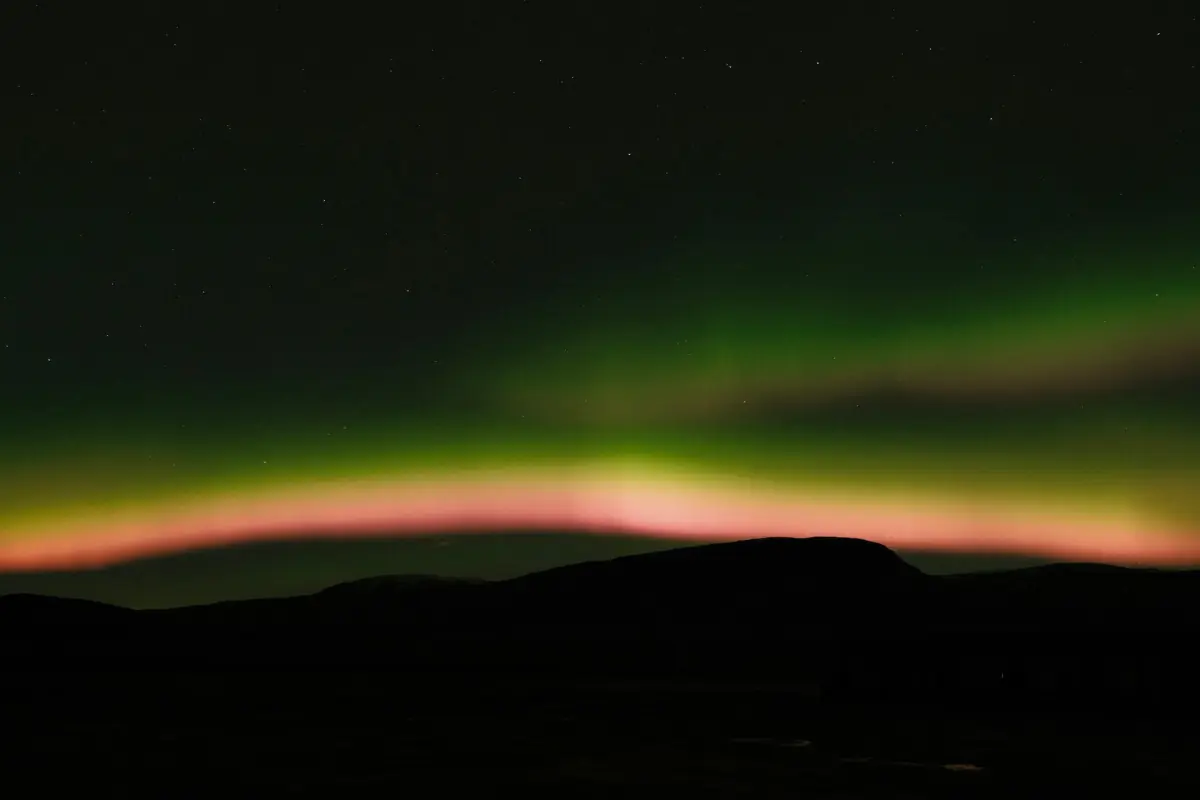
Choosing the best time to see northern lights in Iceland
The best time to see northern lights in Iceland is within the tourist viewing season from late August to mid-April, when darkness can support an evening search. Aurora activity alone is insufficient: the sky also needs to be at least partly clear. Choose a travel window first, then make the decision about an individual evening using the weather and cloud forecast.
Iceland's northern lights season is a planning window rather than a common timetable for every excursion. A bus trip and a harbour cruise may operate on different dates. Match your travel dates to the actual departure you want, and leave another evening available if the search is an important part of your visit. Several nights allow another attempt, without promising a sighting.

Monthly differences within Iceland's viewing season
Iceland's month-to-month daylight changes affect the shape of your day, but choosing a clear search evening requires a local forecast as well. Late August and April sit at the edges of the tourist season. Winter brings longer nights alongside the need to plan for snow, ice and wind. A long night still needs suitable cloud conditions and a safe journey.
Choose the balance between daytime plans and evening searching that suits your trip. Use the weather service's location-specific times for sunset and darkness when planning a particular date. Daylight summaries are too coarse to turn into a precise number of fully dark hours. For the journey itself, the airport and self-driving guide explains the separate transport decisions.
Our take
This guided outing uses live forecasts and offers a retry subject to availability if no lights are seen.
Hand-picked tours, booked through GetYourGuide. Prices are indicative starting prices in euros (as of November 2026). Tap a tour for live availability and the current price in your currency.

A guided search using the forecasts
This four-hour coach evening uses current forecasts for route choices and includes camera tips, hot chocolate, Wi-Fi and an onboard toilet. A retry is subject to availability.
How to read an Iceland aurora forecast
An Iceland aurora forecast combines information about cloud and expected activity, which need to be read separately. On the Icelandic weather service map, white represents clear sky and green represents cloud. Move the time control to the evening you are considering; a clear patch at another time does not describe your planned search.
The map offers separate low, middle and high cloud layers as well as a combined view. Look at cloud cover along a realistic route rather than choosing a distant white patch without considering roads. The northern lights forecast for Iceland helps organise a search; this guide does not display a live forecast or tell you what will happen tonight.
The four-hour coach outing featured here uses forecasts to seek clearer skies and aurora activity. Photography tips and hot chocolate form part of the evening, while camera equipment and meals are extra. The stated meeting point is bus stop 12 Höfðatorg, with pickup possible. See departures from Reykjavík for the wider choice of meeting arrangements.
Cloud cover and Kp answer different questions
Kp describes global geomagnetic disturbance, while Iceland's cloud map describes a barrier between the observer and the sky. Cloud cover remains a barrier even with a higher activity reading. Conversely, a clear forecast does not promise that an aurora will appear during your outing. Treat both pieces of information as useful context rather than a pass-or-fail sighting rule.
The activity scale is not a local percentage chance, and a fixed minimum Kp threshold would oversimplify the conditions for Iceland sightings. Decide on safe access and practical timing alongside the sky forecast. If taking photographs is central to your evening, the photography tour guide separates having a photographer from learning to use your own equipment.
Cancellation or another search evening
Iceland northern lights bookings distinguish an operator cancellation, an unsuccessful completed trip and a cancellation made by the traveller. Read the terms for your chosen product rather than treating these outcomes as interchangeable. The forecast-led coach outing includes a retry when no lights are seen, subject to availability; its inclusion does not set a universal retry period for other tours.
Plan the first search before your final available evening if another attempt matters to you. Keep airport travel and onward accommodation commitments in view when arranging a replacement date. The bus tour comparison explains other evening formats, and the accommodation guide helps choose a base with workable pickup arrangements.
When to visit Iceland beyond the aurora search
Iceland's wider travel season deserves a separate decision from the timing of a northern lights evening. Use when to visit Iceland for that broader planning question. If you are still choosing your destination for an aurora trip, compare the practical format of northern lights in Tromsø without assuming that either destination guarantees clearer skies.
Iceland northern lights season questions
When is the viewing season?
Late August to mid-April is the tourist viewing season for northern lights in Iceland. Individual excursions have their own operating dates. Darkness and at least partly clear skies remain essential, so use the season to choose travel dates and the local forecast to plan a particular evening.
Does green on the forecast map mean aurora?
No. Green on the Icelandic weather service cloud map means cloud cover; white means clear sky. Aurora activity is shown separately. Set the map to your planned observation time and consider the cloud layers alongside safe road access, rather than interpreting green shading as a sighting prediction.
Does a longer stay guarantee a sighting?
No. Several nights in Iceland leave room for another search or a weather-related change, but they do not guarantee an aurora sighting. A repeat excursion depends on the purchased product's terms and availability. Keep a spare evening practical by considering your return transport and the location of your accommodation.